...
Skip links

The Sea Moss Controversy: Real or Fake?

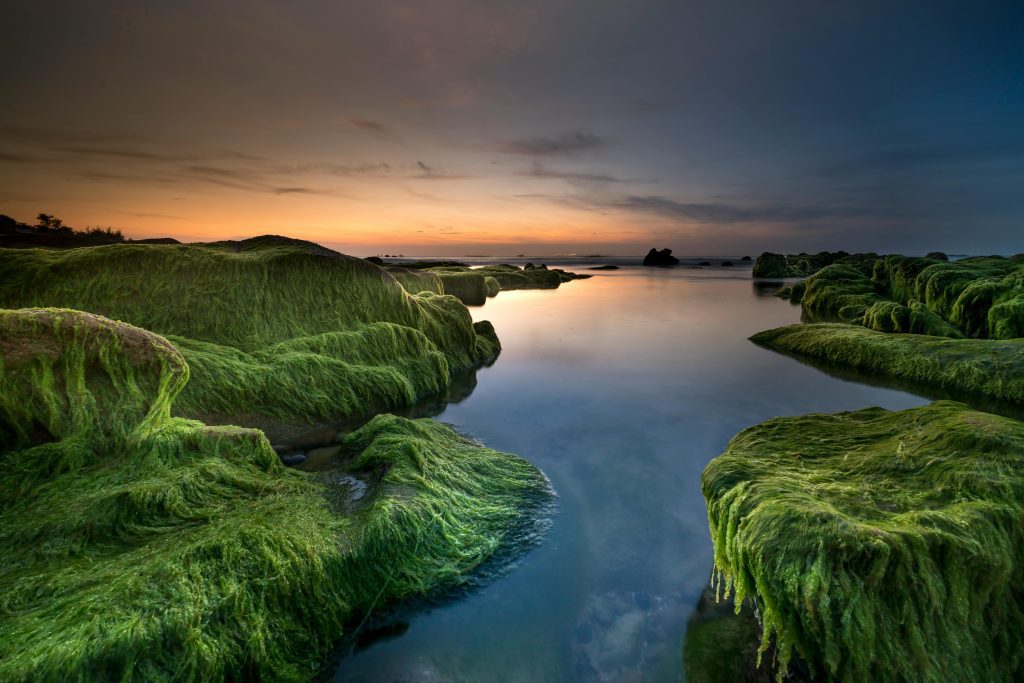
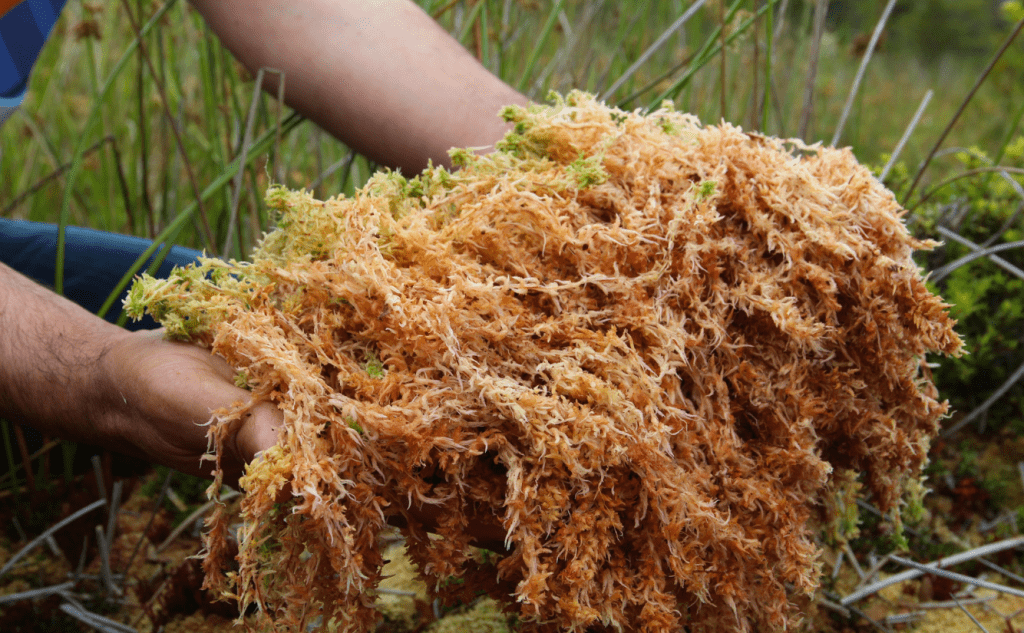
Sea moss grows in oceans all around the world – from the cold Atlantic coasts of Ireland, to the warm, tropical waters of the Caribbean. Though different species thrive in different climates, they all share one defining trait: a natural ability to absorb and store essential minerals from the sea.

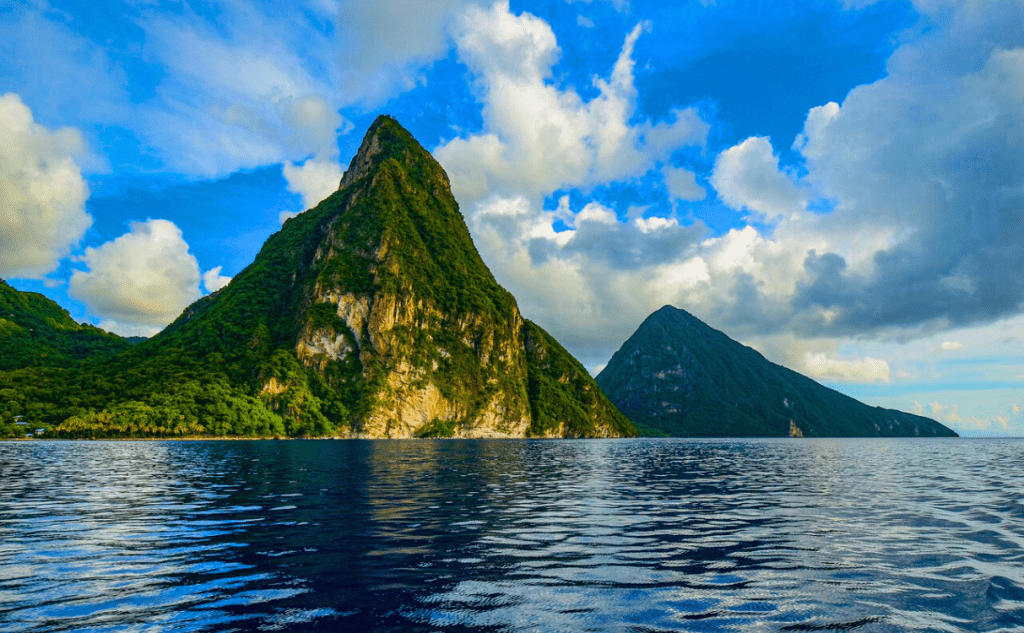
In the Caribbean especially, sea moss is more than just a plant – it’s a way of life. For generations, island communities have harvested it by hand, dried it in the sun and crafted the famous Irish moss drink – a blend of sea moss, spices and sweet milk known for its restorative power. In places like Saint Lucia, Jamaica and Grenada, it has long symbolised health, heritage and harmony with the sea.

Over the past decade, the teachings of Dr. Sebi and rise of the alkaline movement have brought seamoss into the global spotlight, celebrated as a “super food” rich in over ninety minerals. But as its popularity and demand has grown, so have questions about authenticity and sourcing.

Those questions recently erupted online, sparking a viral debate over Saint Lucian Sea moss. A video from the owner of a major alkaline health company accused the island of producing “fake” sea moss, igniting outrage among consumers, farmers and the wider community. In response, Export Saint Lucia and its CEO Sunita Daniel firmly rejected the claims, emphasising that the island’s sea moss is rigorously tested and certified by both local and international agencies, including the U.S. FDA.

Despite the controversy, authenticity isn’t mysterious – it’s measurable. Let’s strip away the noise and uncover what truly makes sea moss real.

What Makes Sea Moss Real: The Ion-Exchange Process

At its core, sea moss (Chondrus crispus, Gracilaria and Eucheuma species) is a living mineral matrix – a marine organism that develops its structure and vitality through constant contact with the sea.

When exposed to seawater, its cell walls, made of mucilaginous polysaccharides such as carrageenan, act as natural sponges for minerals. Through a process called ion exchange, these negatively charged polysaccharides attract and bind positively charged ions such as:

  • Magnesium (Mg²⁺) – supports nerve and muscle function & balances electrolytes
  • Calcium (Ca²⁺) – vital for bone health, cellular signalling and muscle contraction
  • Potassium (K⁺) – helps regulate fluid balance, blood pressure and muscle contraction
  • Iron (Fe²⁺) – essential for oxygen transport in the blood and cellular energy production
  • Iodine (I⁻) – supports thyroid function and hormonal balance
  • Zinc (Zn²⁺) – boosts immune function and aids tissue repair and enzyme activity
  • Selenium (Se⁴⁺/Se⁶⁺) – supports immune response and thyroid metabolism

This process gives sea moss its natural bioelectric charge and mineral density. It’s minerals also remain in colloidal form, which is easily absorbed by the body.¹.

This is why sea moss is considered a superfood – its mineral profile mirrors the human body’s own composition, replenishing essential elements on a cellular level and naturally supporting energy, metabolism and recovery.

It can contain over 90 minerals – not through artificial infusion but because the ocean itself is the source and conductor².

Different Sea Moss Species

Sea moss isn’t a single plant but a family of the red algae species that have adapted to their local waters around the world. Each type carries its own texture, colour and nutrient profile, shaped by the minerals, tides and temperatures of its environment. Understanding these variations helps explain why sea moss from different regions can look, feel, and even behave differently when prepared. While more than 4,000 red algae species exist worldwide, the following three are recognised as the main commercial and nutritional species:

Irish Moss (Chondrus crispus)

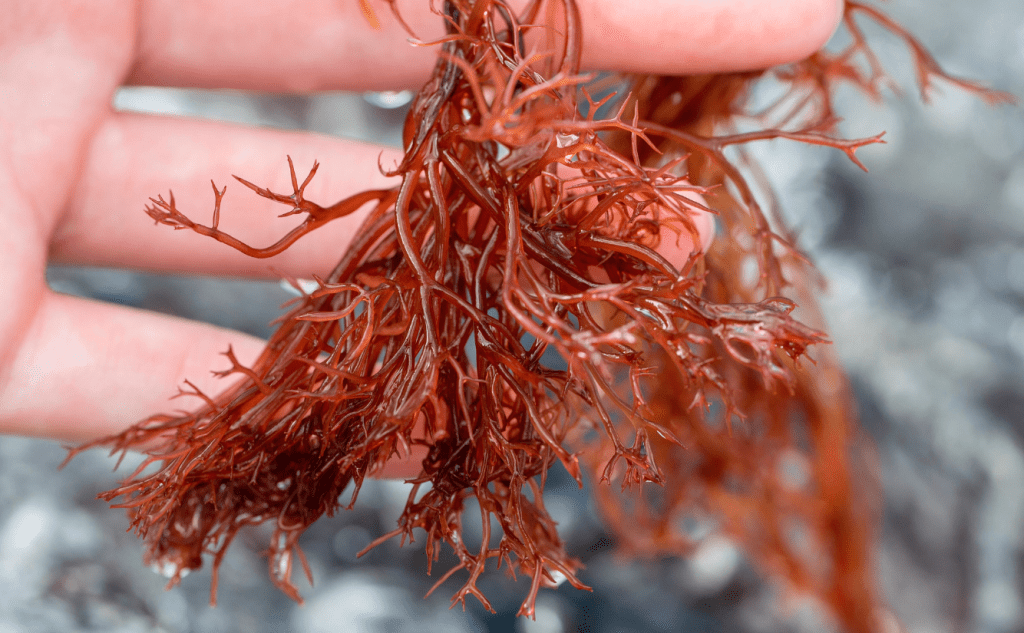
The original “Irish moss” grows in the cold Atlantic waters of Ireland, Scotland and Eastern Canada. It clings to rocks along rugged coastlines and thrives in cold, oxygen-rich tides. Its fronds are flat and fan-shaped, ranging from deep crimson to golden hues. Historically, it sustained coastal communities during the Irish Potato Famine and became a natural remedy for respiratory and digestive issues³.

Caribbean Sea Moss (Gracilaria and Eucheuma cottonii)

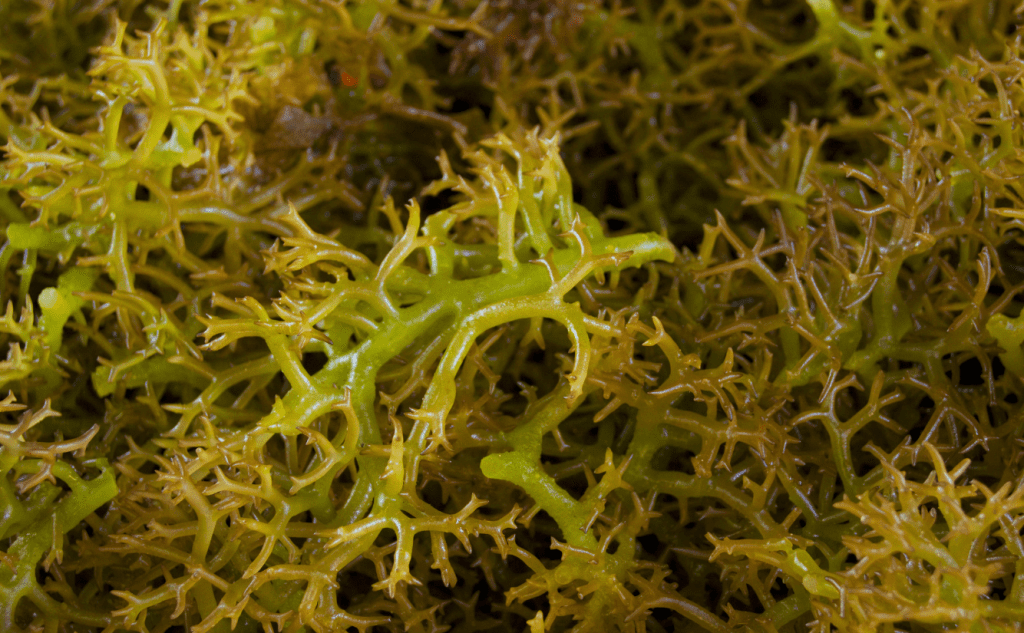
In the Caribbean, sea moss thrives in warm, mineral-rich waters. Species like Gracilaria and Eucheuma cottonii flourish near Saint Lucia, Jamaica and Grenada, attaching naturally to coral or growing on ropes in shallow coastal waters where waves gently circulate nutrients such as magnesium, sulphur and potassium. The Caribbean variety is thinner and more string-like than its Irish counterpart, with colours ranging from golden honey to deep purple and emerald green. Because of the island’s volcanic lands and pristine waters, Saint Lucian sea moss is prized for its mineral diversity and purity – a natural product of its unique marine environment⁴.

Asian Sea Moss (Gelidium and Kappaphycus)

Further east, along the coasts of Japan, Indonesia and the Philippines, are other related species such as Gelidium and Kappaphycus. These are harvested mainly for agar production used in foods, cosmetics and scientific research. Though similar to Gracilaria, they are generally less mineral-dense and more industrially cultivated⁵.

Different Ways Sea Moss Grows

The quality and composition of sea moss are determined by where it grows. Whether it attaches itself to rocks in the open Atlantic or flourishes along calm Caribbean coastlines, the surrounding water conditions – temperature, salinity and mineral content, directly shape its texture, nutrient profile and overall potency. The ocean isn’t just its habitat; it’s the defining factor in its biochemical makeup.

Wildcrafted Sea Moss

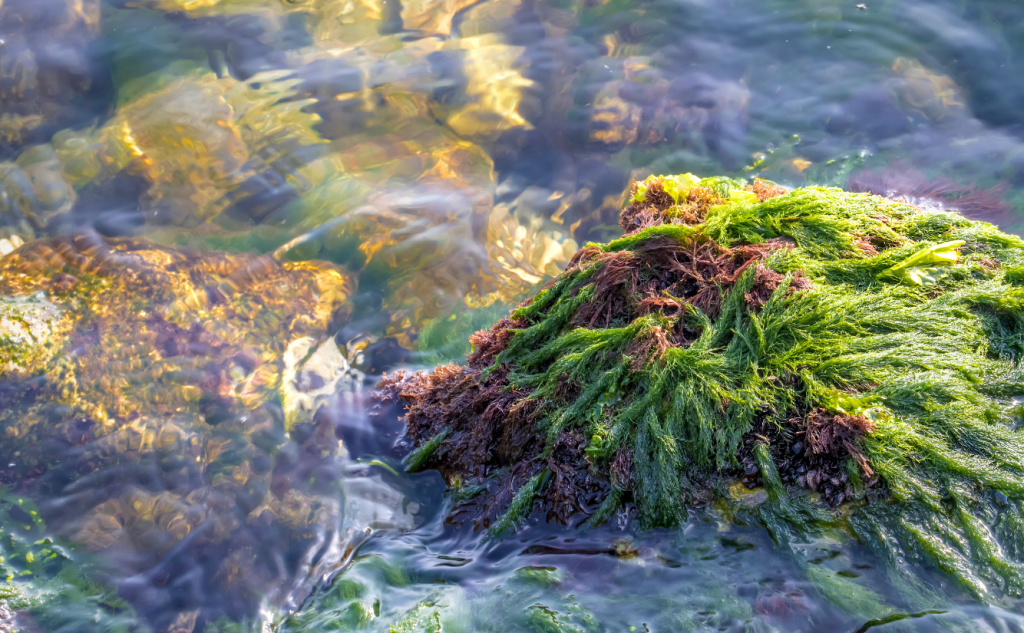
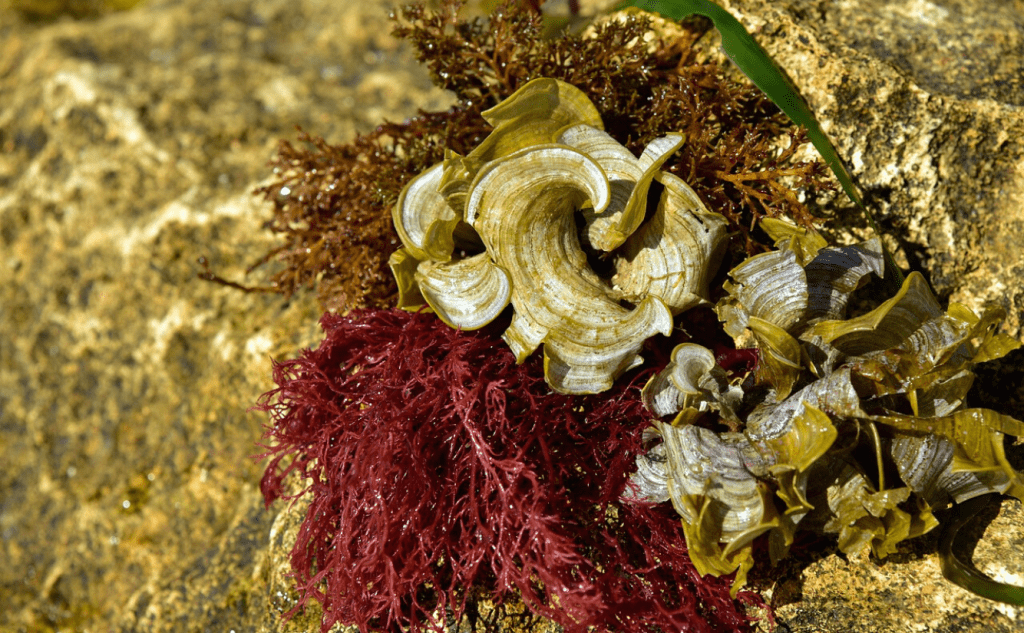
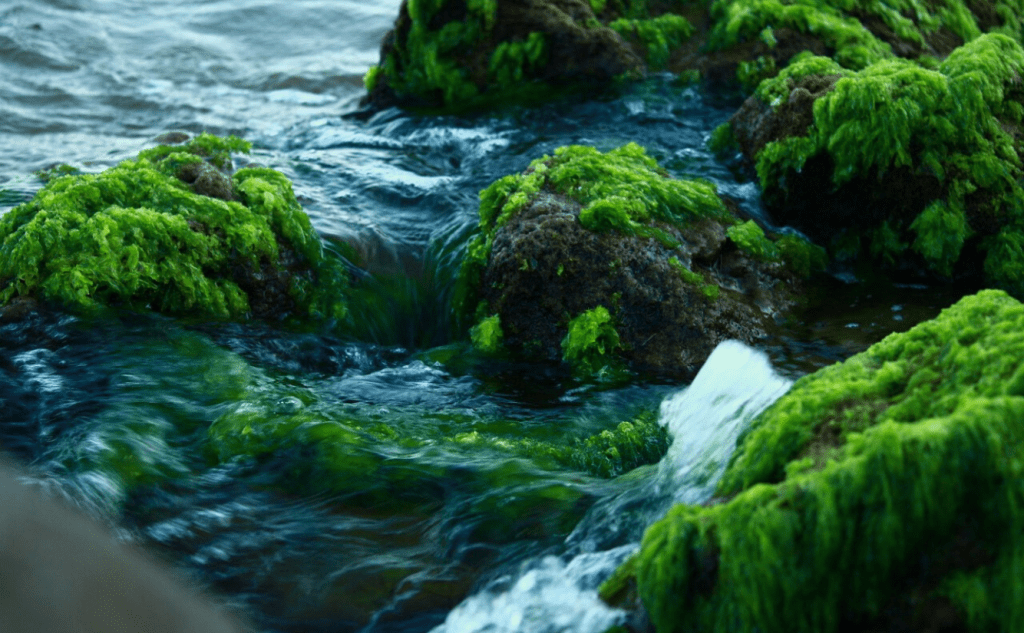
Wild sea moss grows naturally in the open ocean, attaching itself to rocks and reefs exposed to powerful tides and fluctuating temperatures. These natural stressors stimulate the plant’s cellular structure and enhance the ion-exchange process. Because it develops in constantly moving water, wild sea moss is typically thinner, denser in minerals and darker in colour, reflecting the raw energy of its marine environment⁶.

Line-Grown Sea Moss

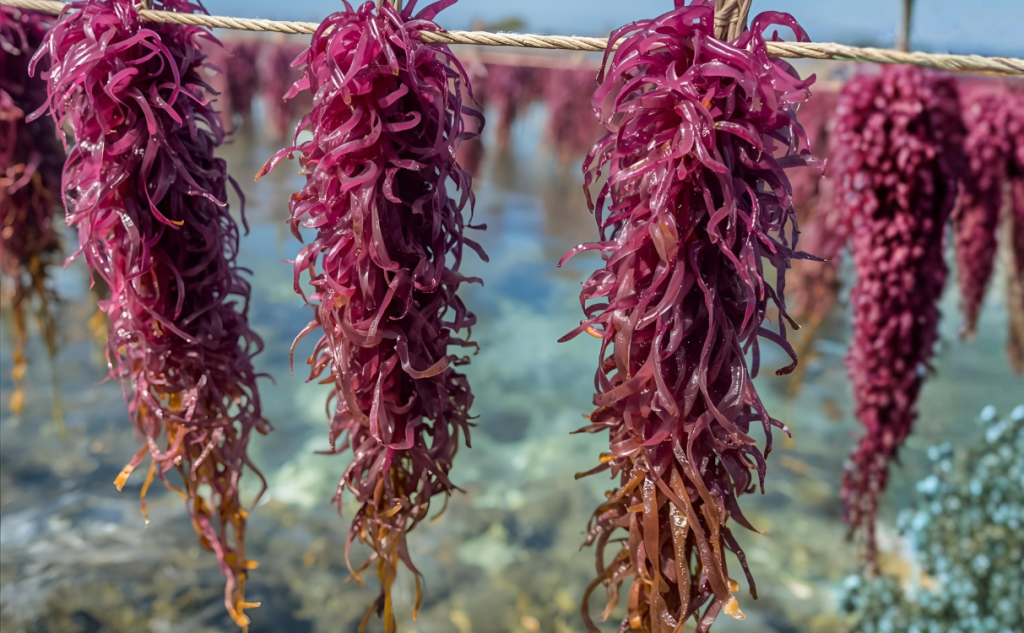
Line-grown or ocean-farmed sea moss, as cultivated in various Caribbean islands, is suspended on ropes in shallow, mineral-rich coastal waters. While this method requires some degree of human intervention, the moss still grows in living seawater, is nourished by natural sunlight and enjoys a similar ecosystem as wild seamoss. This approach ensures sustainability, protects marine biodiversity and provides consistent, high-quality harvests without depleting natural reefs⁷.

Pool-Grown Sea Moss

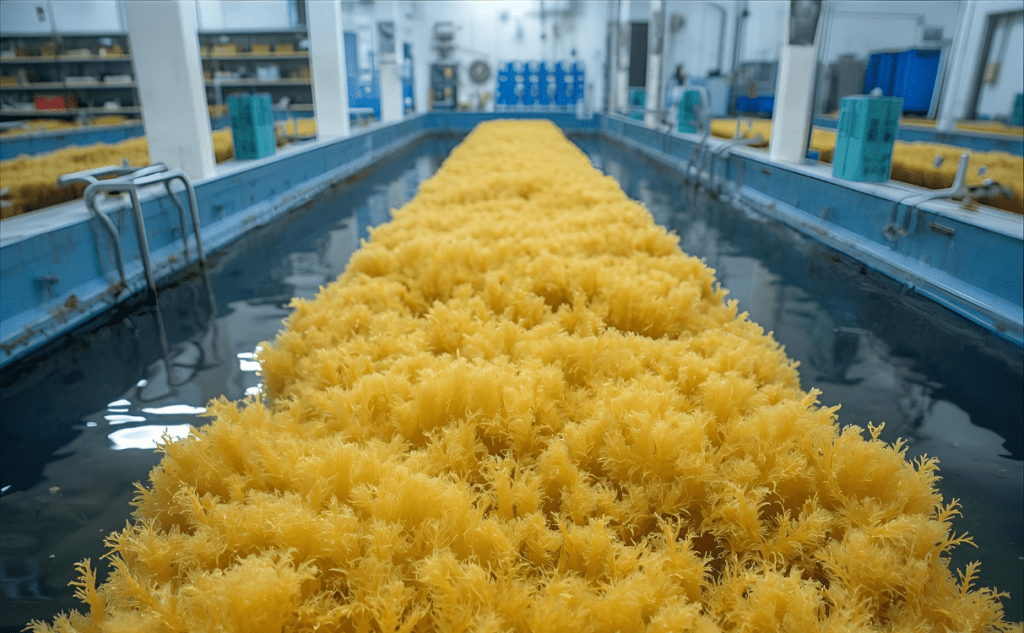
Pool-grown sea moss is produced in artificial tanks using synthetic or salt-based water mixtures. Because these systems lack natural tides, temperature variation and the full spectrum of the ocean's minerals, the plant grows faster but less nutrient-dense. It appears pale, overly thick and mucilaginous, with less bioelectric conductivity – signs that it was not formed through true ion-exchange⁸.

Ultimately, the ocean itself determines authenticity. Wildcrafted and line-grown sea moss both form in natural seawater and are shaped by motion, minerals and sunlight. Pool-grown moss, by contrast, represents a completely artificial category – a product of replication rather than nature.

Why Dr. Sebi Advocated For Wildcrafted Sea Moss

Dr. Sebi, known for promoting an alkaline diet and natural plant-based foods, placed sea moss at the heart of his teachings. His emphasis was always on harvesting from natural, ocean conditions rather than controlled or artificial cultivation, as food grown in its intended environment carries the electromagnetic signature of life.

In Dr. Sebi’s view:

• Wildcrafted means sea moss that grows freely in the open sea, attached to rocks or reefs, exposed to natural tides, mineral-rich seawater, sunlight and waves.
• Such conditions are considered to maximise mineral content, ionic charge and life force.
• Anything grown in tanks, artificial pools or under chemically replicated conditions is considered inferior in nutritional value

He was also explicitly against sea moss being placed in artificial environments. In one of his lectures, he described a man in Boston who took a piece of sea moss from the ocean – knowing that sea moss thrives only in constant motion – and placed it in a brine tank with saltwater alongside a machine that continuously moved to mimic the ocean. The sea moss grew very thick and fast, producing extreme mucilage when soaked and leaving visible salt crystals after drying. Sebi contrasted this with real ocean-grown sea moss, which remains thin, mineral-dense and lightly fibrous, expanding only modestly in water. He explained that natural sea moss carries a unique bioelectric vitality that energises the body⁹.

Sebi highlighted that authentic sea moss undergoes iontophoresis – a natural electrochemical process where minerals move through seawater under the influence of electrical gradients. This constant motion drives ions like magnesium, calcium, potassium and iodine into the plant’s cells, giving sea moss its measurable conductivity and mineral density. Artificial systems can imitate movement but lack nutrient diversity and living charge, producing faster, bulkier growth with less mineral value and more mucilage¹⁰.

Seeing Line-Grown Sea Moss Through Sebi's Lens

Dr. Sebi championed that the true power of food comes from its connection to living environments, believing that a plant separated from its natural ecosystem loses its vitality and mineral intelligence¹¹.

Line-grown sea moss occupies the middle ground between wildcrafted and artificial forms. It grows in the open ocean, nourished by real seawater, sunlight and tides, but instead of attaching to rocks, it is supported by ropes or lines. From a strict Sebian perspective, this human-managed setup makes it less than purely wildcrafted, yet it doesn’t violate the spirit of his philosophy since it remains part of the living marine ecosystem. It continues to channel the sea’s energy, mineral flow and bioelectric charge – the same natural forces Dr. Sebi valued¹².

Scientifically, line-grown sea moss still participates in the ocean’s ion exchange (iontophoresis). According to Dr. Sebi, this exchange is most potent if the moss clings to ocean rocks and the movement of the tide forces minerals directly across its surface. Line-grown sea moss still absorbs minerals from seawater but, because it hangs freely rather than attaching to mineral rock, it may be considered less directly charged. This subtle difference is what Sebi referred to when distinguishing naturally anchored sea moss from cultivated varieties¹³.

However, Dr. Sebi’s warnings become relevant if line-grown sea moss drifts away from natural principles. If farmers overcrowd ropes, grow in stagnant or enclosed coastal ponds, or allow salinity to rise unnaturally, the moss starts behaving like artificially stimulated sea moss. It grows too thick, expands excessively when soaked and often carries visible salt crystals – the same signs Sebi described in his Boston example. These changes indicate a disruption in balance: a plant grown too quickly, with form but not true mineral function¹⁴.

Considering Sebi’s philosophy, sea moss that expands heavily, feels overly gelatinous or carries surface salt has lost its bioelectric integrity – it no longer carries the ocean’s energy but mimics its appearance. However, if line-grown sea moss were cultivated under natural conditions, maintained an alkaline pH and displayed the same physical traits that Dr. Sebi associated with wildcrafted varieties, it could still be considered in harmony with his philosophy.

How to Identify Real v Fake Sea Moss

In a market flooded with options, being able to recognise authentic sea moss is crucial. Genuine sea moss carries the imprint of the ocean – subtle irregularities, mineral depth and natural vitality that artificial or pool-grown varieties cannot reproduce. The following cues can help distinguish between the two:

1. Texture and Structure

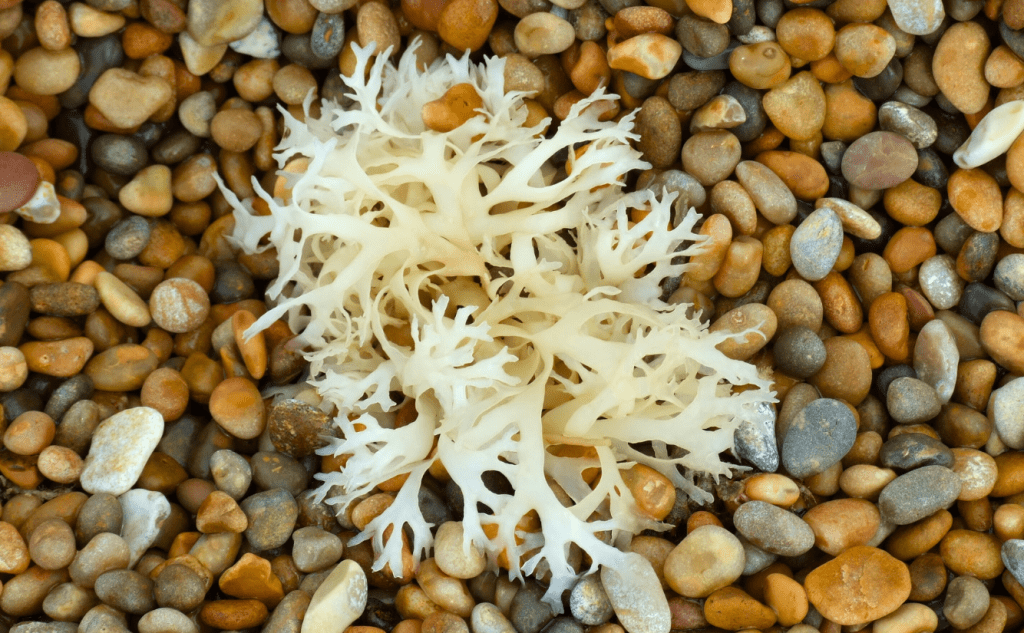
Real sea moss has a firm, fibrous texture when dry and becomes gel-like but not overly slippery when soaked. Its strands vary slightly in thickness and shape, often with small imperfections or frayed ends. Pool-grown moss, in contrast, tends to be overly smooth, thick and uniform – a sign it developed without natural wave pressure or mineral variation¹⁵.

2. Colour Variation

Authentic sea moss ranges in colour from golden beige to deep purple, olive or green depending on sunlight exposure and mineral concentration. These subtle variations are natural indicators of its environment. Artificially grown or chemically treated moss often looks pale, overly bright or evenly coloured – evidence of artificial manipulation or bleaching¹⁶.

3. Smell and Taste

True ocean-grown sea moss carries a light, briny aroma – the clean scent of the sea. When soaked, it should smell fresh, not fishy or chemical-like. Its taste is mild and earthy. Pool-grown moss often lacks this marine scent or has an artificial odour caused by chemical additives or stagnant water¹⁷.

4. Conductivity & Mineral Profile

Real sea moss conducts electricity due to its ionic mineral content. In laboratory testing, authentic ocean-grown moss shows measurable levels of magnesium, iodine, potassium, calcium and trace elements like selenium and zinc. Pool-grown moss has significantly lower conductivity, reflecting its lack of natural ion exchange¹⁸.

5. Source Transparency

Reputable producers disclose where and how their sea moss is grown. Certified Saint Lucian sea moss, for example, is regulated by Export Saint Lucia and tested by local and international agencies for purity and mineral composition. Products that make vague “wildcrafted” claims without evidence of origin or certification should be treated with caution¹⁹.

Authenticity is not about marketing labels but measurable truth – texture, mineral balance and traceability. Real sea moss grows in living seawater, shaped by tides, light and minerals. Everything else, no matter how similar it appears, is merely an imitation of nature.
Redefining Authenticity and Moving Forward

The claim that Saint Lucian sea moss is “fake” stems largely from semantics – a strict interpretation of what makes sea moss “authentic.” The speaker, a prominent figure in the alkaline community, follows Dr. Sebi’s philosophy on wildcrafted food and defines authenticity in absolute terms: only sea moss that grows naturally on ocean rocks is considered ‘real’. By that definition, line-grown sea moss – cultivated on ropes in shallow, mineral-rich coastal waters is viewed as “farmed” and therefore impure.

However, this interpretation overlooks nuance. Line-grown sea moss is not synthetic or lab-made; it grows in the open sea, nourished by sunlight, waves and similar mineral currents that feed wild moss. It undergoes the same ion-exchange process, forming its bioelectric structure naturally. In truth, line-grown sea moss is best described as hybrid, not fake – a cultivated extension of natural processes that attempts to preserve both the plant’s chemistry and its environment. The true fake sea moss, by contrast, is the kind produced artificially in labs or tanks – grown in synthetic brine without real seawater or tides, resulting in fast but nutritionally empty growth²⁰.

While some critics are genuinely motivated by purity, the delivery can do more harm than good. Cut-throat marketing and harsh accusations can undermine the livelihoods of ethical farmers, small producers and communities who depend on this trade. Public claims of “fake” sea moss, when oversimplified, risk damaging trust, confusing consumers and devaluing honest work built on sustainability and care.

Dr. Sebi’s message was always one of truth, health and alignment with nature – not competition or conflict. When the message becomes a marketing weapon, it loses its essence.

The real focus should be on education: empowering our communities to distinguish between what’s wild, what’s cultivated, and what’s simply artificial.

There is space for both wildcrafted and line-grown sea moss in this evolving industry. Even as advocates of alkalinity who naturally favour wildcrafted sources, we remain open to balance and sustainability. Purists can remain true to ocean-harvested sea moss, while others may embrace ethically cultivated line-grown varieties that offer greater accessibility, protect marine life and support long-term sustainability. Authenticity does not have to mean exclusivity – it can reflect balance, integrity and respect for both tradition and progress.

  1. Export Saint Lucia. Statement on Authenticity of Saint Lucian Sea Moss. Export Saint Lucia, 2023. https://exportsaintlucia.gov.lc 
  2. U.S. Food and Drug Administration. Food Facility Registration and Seaweed Imports Compliance. FDA, 2023. https://www.fda.gov/food

  3. Guiry, M. D. & Guiry, G. M. AlgaeBase: Chondrus crispus (Irish Moss). National University of Ireland, 2022. https://www.algaebase.org

  4. Food and Agriculture Organization of the United Nations (FAO). Seaweed Cultivation and Marine Aquaculture in the Caribbean. FAO Fisheries Technical Paper, 2019. https://www.fao.org/3/ca5589en/ca5589en.pdf

  5. Hurtado, A. Q., et al. Cultivation of Kappaphycus and Eucheuma: Southeast Asian Experience. Journal of Applied Phycology, 2014. https://link.springer.com/article/10.1007/s10811-014-0376-6

  6. Bixler, H. J. & Porse, H. A Decade of Change in the Seaweed Hydrocolloids Industry. Journal of Applied Phycology, 2011. https://pubmed.ncbi.nlm.nih.gov/27547554/

  7. Naylor, R. L., et al. Sustainability of Marine Aquaculture. Nature, 2021. https://www.nature.com/articles/s41586-021-03870-1

  8. McHugh, D. J. A Guide to the Seaweed Industry. FAO Fisheries Technical Paper 441, 2003. https://www.fao.org/3/y4765e/y4765e.pdf

  9. Sebi, A. Natural Healing Teachings. Dr. Sebi’s Cell Food, 1988. https://drsebiscellfood.com

  10. Sebi, A. Lecture on Sea Moss and Bioelectric Food. Honduras, 1990. https://drsebicellfood.com/resources

  11. Benning, C. & Somerville, C. Plant Lipid Metabolism and Photosynthetic Energy Flow. Science, 1992. https://www.science.org/doi/10.1126/science.257.5067.1359

  12. Lobban, C. S. & Harrison, P. J. Seaweed Ecology and Physiology. Cambridge University Press, 1994. https://www.cambridge.org/9780521404831

  13. Pereira, L. Seaweeds as Source of Bioactive Substances. Springer, 2018. https://link.springer.com/book/10.1007/978-3-319-92804-6

  14. Critchley, A. T. & Ohno, M. World Seaweed Resources: An Authoritative Reference System. ETI BioInformatics, 2006. https://www.researchgate.net/publication/259203370

  15. Couteau, C. & Coiffard, L. Seaweed Application in Cosmetics. Marine Drugs, 2021. https://pubmed.ncbi.nlm.nih.gov/33918920/

  16. Vásquez, J. A., et al. Seaweed Farming and the Environment: Sustainable Development of Marine Plant Resources.Algal Research, 2018. https://www.sciencedirect.com/science/article/pii/S2211926418302127

  17. Hayashi, L., et al. Physiological Responses of Gracilaria and Eucheuma to Cultivation Conditions. Aquaculture Reports, 2020. https://www.sciencedirect.com/journal/aquaculture-reports

  18. Khairy, H. M. & El-Sheikh, M. A. Mineral Composition and Conductivity of Seaweeds. Egyptian Journal of Aquatic Research, 2015. https://doi.org/10.1016/j.ejar.2015.04.002

  19. Export Saint Lucia & Bureau of Standards Saint Lucia. Sea Moss Certification and Export Quality Standards. Saint Lucia Government Publications, 2023. https://exportsaintlucia.gov.lc

  20. Arasaki, S. & Arasaki, T. Vegetables from the Sea: Japan’s Favorite Seaweeds and Sea Vegetables. University of Tokyo Press, 1983. https://www.amazon.com/Vegetables-Sea-Seaweeds-Sea-Vegetables/dp/4770025339

This article is for educational purposes only and does not provide medical advice. Always consult a qualified healthcare professional before making changes to your diet, lifestyle, or health regimen.

Share This Article 

Leave a comment

Thanks for Reading

Home
Account
0
Cart
Search